Code
ggplot(ElephantsMF, aes(x=Age,y= Height,color=Sex)) +
  geom_point() +
  geom_smooth(method="lm", formula= y~ poly(x, 2), se=TRUE) +
  xlab("Age (Years)") +ylab("ShoulderHeight(cm)")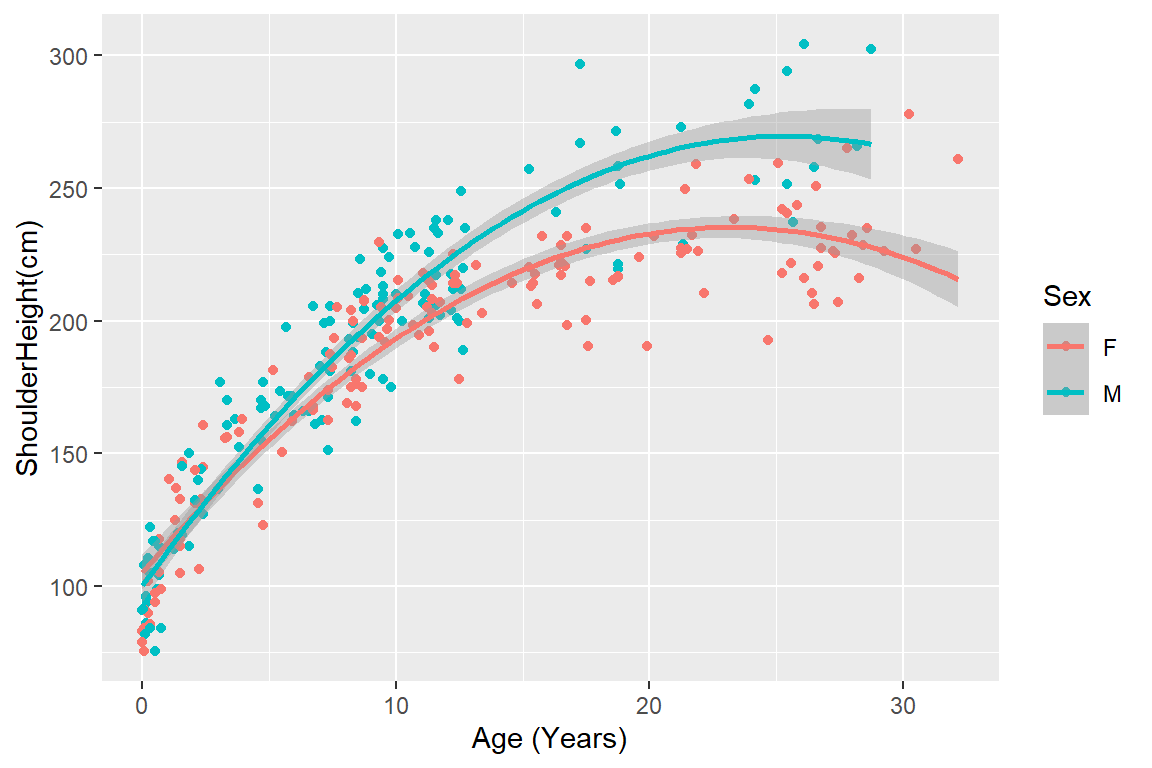
Both are acceptable and can capture the non-linear relationship between height and age, but a quandratic will eventually “bend” (up or down) in both directions.
ggplot(ElephantsMF, aes(x=Age,y= Height,color=Sex)) +
geom_point() +
geom_smooth(method="lm", formula= y~ poly(x, 2), se=TRUE) +
xlab("Age (Years)") +ylab("ShoulderHeight(cm)")
ggplot(ElephantsMF, aes(x=Age,y= Height,color=Sex)) +
  geom_point() +
  geom_smooth(method="lm", formula= y~ ns(x, 3), se=TRUE) +
  xlab("Age (Years)") +ylab("ShoulderHeight(cm)")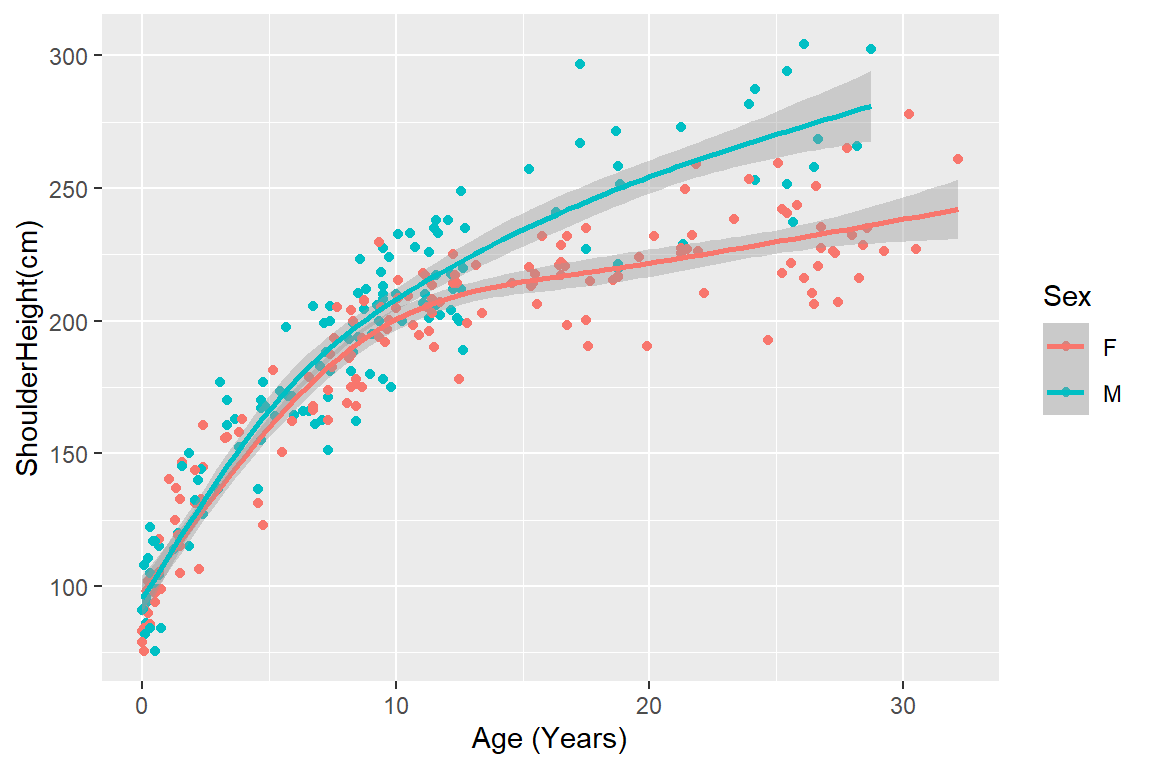
Mapping color to Sex results in an interactive model being plotted:
lm.ele <- lm(Height ~ Sex*poly(Age, 2), data = ElephantsMF)That is not this model:
lm.ele <- lm(Height ~ Sex + poly(Age, 2), data = ElephantsMF)ggplot(ElephantsMF, aes(x=Age,y= Height,color=Sex)) +
geom_point() +
geom_smooth(method="lm", formula= y~ poly(x, 2), se=TRUE) +
xlab("Age (Years)") +ylab("ShoulderHeight(cm)")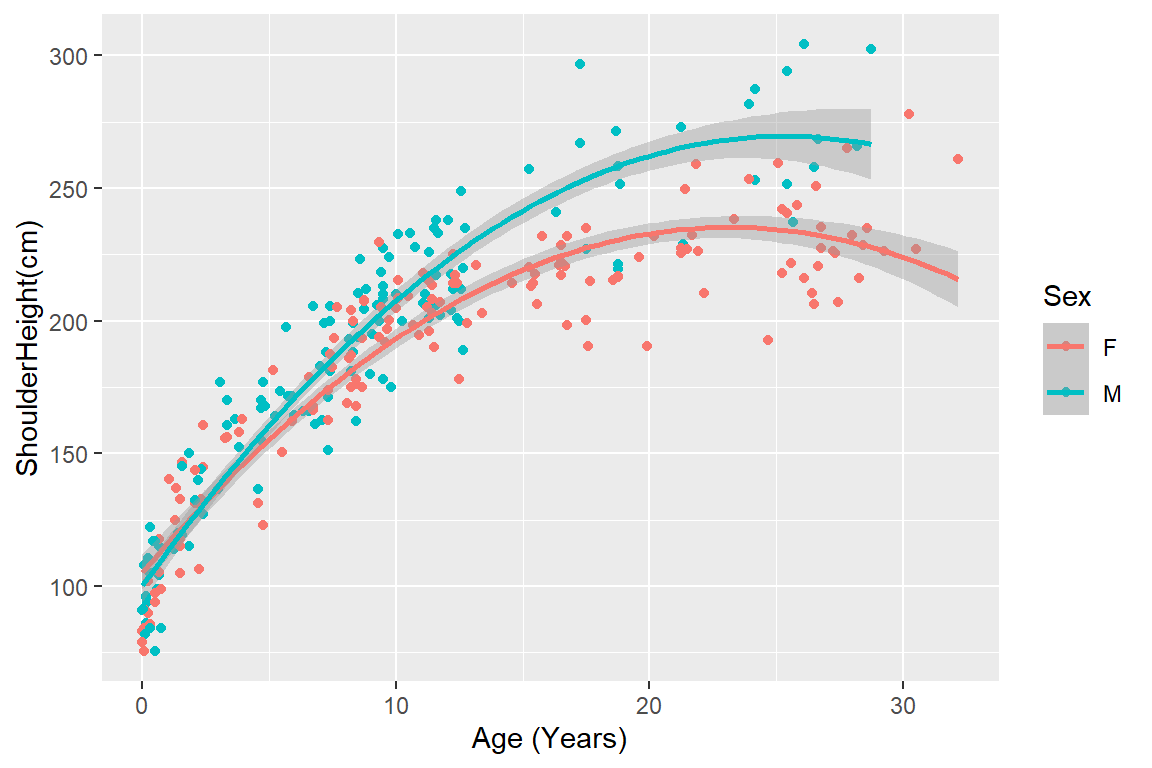
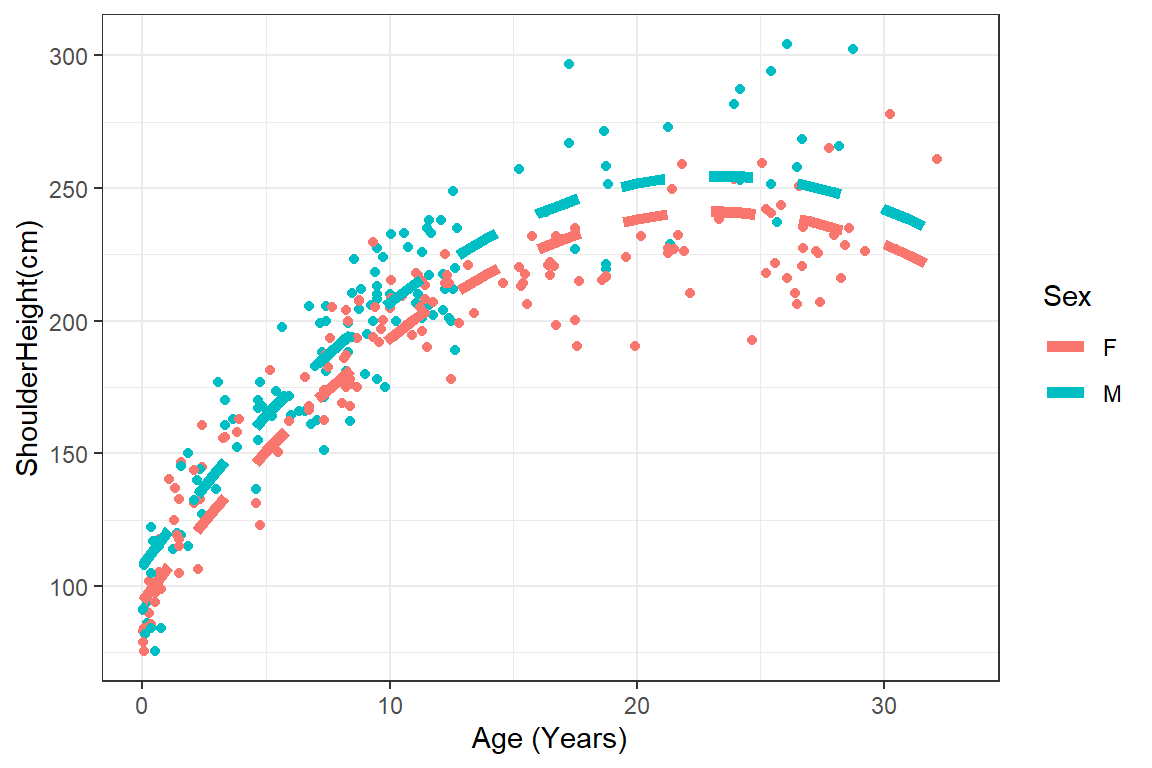
newdata <- data.frame(expand.grid(Sex = c("M", "F"),
                                  Age = seq(0, 33, by = 1)))
newdata$phat <- predict(lm.ele, newdata =newdata)
ggplot(ElephantsMF, aes(x=Age,y= Height,color=Sex)) +
  geom_point() +
  geom_line(data = newdata, aes(Age, phat, col = Sex), lty =2, lwd =2)+
  xlab("Age (Years)") +ylab("ShoulderHeight(cm)") +
  theme_bw()